
India is expected to ramp up its purchase of crude oil from the United Arab Emirates (UAE) in the coming months following discussions between the two countries on the sidelines of the ongoing COP28 summit in Dubai, multiple sources in the know said. The UAE has historically been India's third-largest source of crude. It has suffered the largest drop in shipments since Indian refiners began to binge on Russian crude in 2022.

'Trump administration wanted a positive tone at this summit, but there was still some anxiety that there could be some awkward moments -- and there were not.'
US President Donald Trump and Indian Prime Minister Narendra Modi met in Washington D.C. to discuss a range of issues including trade, defense, and energy. The two leaders announced plans to finalize "wonderful trade deals" for both countries, and Trump emphasized the need for India to purchase US oil and gas. Modi congratulated Trump on his second term and highlighted the importance of working together to further strengthen the India-US relationship. The meeting also addressed the ongoing conflict in Ukraine, with Modi reiterating India's commitment to peace.
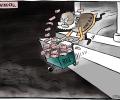
The windfall taxes on domestic crude oil production and fuel exports will generate close to $12 billion (Rs 94,800 crore) for the government in the remainder of the current fiscal while trimming profits of firms such as Reliance Industries Ltd and ONGC, Moody's Investors Service said Tuesday. On July 1, the government imposed windfall gain taxes on the export of petrol, diesel and aviation turbine fuel (ATF), and on the domestic production of crude oil. It has also mandated exporters to meet the requirements of the domestic market first.
Investors and companies should brace for higher commodity prices over the next few weeks in the backdrop of Russian troops attacking Ukraine on Thursday. Meanwhile, US President Joe Biden threatened new sanctions against Russia for an act of aggression against Ukraine. All this, analysts believe, can push prices of key commodities such as crude oil, ammonia, urea, potash, and phosphates higher.
Come December, India may have to re-evaluate purchases of Russian oil if a price cap on crude oil proposed by the US and the European Union (EU) comes into effect. That impacts nearly a quarter of India's oil purchases that come at a discount, helping limit marketing losses for India's state refiners and enabling New Delhi to manage inflation by freezing pump prices of motor fuels. In September, India imported 1 million barrels a day or 24 per cent of its overall imports from Russia, which became the biggest supplier of oil to India.
India's crude oil import bill is set to exceed $100 billion in the current fiscal year ending March 31, almost double its spending last year, as international oil prices trade at seven-year highs. India spent $94.3 billion in the first 10 months (April-January) of the ongoing financial year that started April 1, 2021, according to data from the oil ministry's Petroleum Planning & Analysis Cell (PPAC). It spent $11.6 billion in January alone when oil prices had started to surge.

Oil and LNG prices are likely to shoot up if Iran is to block Strait of Hormuz, through which countries like India import crude oil from Saudi Arabia, Iraq and UAE, leading to a spike in inflation, analysts said on the Iran-Israel conflict. The Iran and Israel conflict has escalated over the last few days. Iran first launched drone and rocket attacks on Israel, which retaliated by firing a missile. Crude oil prices have hovered around USD 90 per barrel since the conflict.

After Chennai, it is Coimbatore, Madurai, and Tiruchirappalli, that are emerging as manufacturing hubs. Coimbatore is India's top Tier-II city in terms of the number of GCCs, according to a report by Cushman & Wakefield.
Russia on Thursday said it was not bothered at a possible price cap on its crude oil proposed by the West, saying Moscow will negotiate directly with its partners like India and China as the price should be decided between the producers and consumers, and "not someone who just decided to punish someone." Members of the G7 have agreed to impose a price cap on Russian oil in a bid to hit Moscow's ability to finance the war in Ukraine. Countries want to reach an agreement ahead of December 5, when Europe's embargo on Russian crude travelling by sea takes effect.

Putin is keen on establishing a good personal rapport with Trump and anchor a meaningful US-Russia partnership, realistic enough to accept that Trump is as good an American president as Russia would ever get, observes Ambassador M K Bhadrakumar.

India on Tuesday pitched for a stake in vast oil and gas fields as well as LNG terminals in the frozen Artic of Far East Russia as it looked to import more oil from the former Soviet republic as part of a strategy to diversify its energy basket.
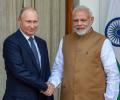
By driving a hard bargain with Russia in procuring crude oil at the lowest price possible, India is furthering the policy of G7 and Washington is "comfortable" with New Delhi over its approach in addressing issues relating to energy security, a top Biden administration official said.

Closely watched by the world for any escalation, the Iran-Israel conflict is already showing early signs of stress for India Inc - longer deliveries, doubling freight rates, extended working capital cycles, and higher costs. For those yet to feel the heat, there is growing apprehension and nervousness over future developments, observed industry executives.

Russia has welcomed India's decision to not support the price cap on Russian oil announced by G7 and its allies and offered it cooperation on leasing and building large-capacity ships to overcome the ban on insurance services and tanker chartering in the European Union and Britain to continue buying discounted oil. The offer came as Russian Deputy Prime Minister Alexander Novak held a meeting with the Indian Ambassador to Moscow, Pavan Kapoor, on Friday. "The Deputy Prime Minister welcomed India's decision not to support the price cap on Russian oil, which was imposed on December 5 by the G7 countries and their allies," the Russian foreign ministry said in a statement.
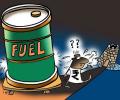
India has taken up the issue of high oil prices with producer nations and OPEC, demanding affordable rates, Minister of State for Petroleum and Natural Gas Rameswar Teli told the Lok Sabha on Monday. Petrol and diesel prices have shot up to record highs across the country after relentless price increases since early May. Petrol is retailing above Rs 100 a litre in more than a dozen states.
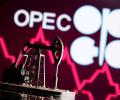
It's the sovereign right of the Organization of Petroleum Exporting Countries to decide on the oil production capacities, Union Minister of Petroleum and Natural Gas Hardeep Singh Puri said Friday. Refraining from commenting on the controversial decision of OPEC on cutting oil production by two million barrels a day, which has taken the world by surprise, Puri said it is likely to be scrutinized very carefully. During an interaction with a group of Indian reporters, he said that India as one of the major consumers of oil and gas also has a major say in the global oil market.

The impact of fiscal measures announced by the government to contain inflation will be seen in the next few months because of the base effect, reports Indivjal Dhasmana.

Investors are showing some interest in the downstream energy cycle. Refiners and marketers, especially the public sector (PSU) oil marketing companies (OMCs) could see a revival of marketing margins. Lower crude oil and gas prices may also improve margins in industries like paints, logistics, synthetic fabrics, plastics, and fertilisers. In the medium-term, however, there could be a supply overhang affecting OMCs as new refining capacities are scheduled to be commissioned, especially in China, and this may lead to a drop in the refining margins as capacity would be surplus to demand until and unless there's a pick-up in global growth.

Top government officials in New Delhi have started discussions with stakeholders ranging from shipping and container companies to export promotion councils to understand the impact of the Iran-Israel tensions and plan ahead. Inter-ministerial talks are also being lined up amid the crisis situation in West Asia, sources confirmed. While the crude flows are not directly under any threat, elevated oil prices remain a concern, according to officials.

Russian forces have made minimal progress on land, sea or air in recent days and they continue to suffer heavy losses, the UK's ministry of defence said on Thursday.
Margins for the oil refining and retailing sector have moved off their peaks, and the average integrated margins (refining plus marketing) for oil marketing companies (OMCs) have normalised. The ascent in crude oil prices, combined with static retail prices, has depressed marketing margins for diesel and petrol. However, the fall in marketing margins has been offset by increased gross refining margins (GRMs).

India is back on the diplomatic table pushing oil producing countries to raise production in a bid to cool down runaway oil prices. Brent crude oil prices traded above $90 a barrel, on Thursday, for the first time since 2014. Brent is the most popular marker for crude oil trade. It is used as a benchmark for two-thirds of the world's internationally traded crude oil.

Billionaire Mukesh Ambani's Reliance Industries Ltd climbed two spots to No. 53 on Forbes' latest Global 2000 list of public companies worldwide. Forbes Global 2000 ranks the largest companies in the world using four metrics: sales, profits, assets and market value, Forbes said releasing the 2022 ranking of the world's top 2,000 companies. Reliance is the top-ranked Indian firm on the list, followed by State Bank of India at No. 105, HDFC Bank at No. 153 and ICICI Bank at No. 204.

Global brokerage firm CLSA has reversed its early tactical shift from Indian equities to Chinese stocks, and has decided to raise India allocation while cutting exposure to China. In its report titled 'Pouncing Tiger, Prevaricating Dragon', CLSA cited challenges facing Chinese markets in the aftermath of Donald Trump's victory in the US elections as the reason for the move. "Misfortune can happen in threes. So it has played out for Chinese equities over the past week.
India, the world's third-largest energy consumer and importer, on Wednesday warned of high oil prices hurting the nascent and fragile global economic recovery and floated an idea of long-term supply contracts that provide predictable and stable pricing. Speaking at the India Energy Forum by CERAWeek, Oil Minister Hardeep Singh Puri said there was a mismatch between demand for oil and the supplies producers such as OPEC+ were making and there was a case for raising the production. The world, he said, needs "predictable, stable and affordable" prices for it to recover back to pre-pandemic levels.

Siemens delivered a strong margin performance and also reported high other income to beat consensus in the January-March quarter (Q2) of FY24 (the company's year-end is September 30). In addition, it has opted to demerge the energy vertical with a 1:1 award of shares in the newly demerged entity which will be listed by the end of this year (CY25).

Major General S C N Jatar, who passed into the ages on Monday night, thwarted anti-national forces at the peak of the Assam agitation. Colonel Anil A Athale (retd) salutes this officer and gentleman.
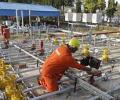
India is the world's fourth-largest importer of natural gas, accounting for six per cent of the global market.

'Invest only in stocks of those companies that deliver on earnings and there is earnings visibility too for the next few quarters.'
The government has cut windfall gains tax on domestically-produced crude oil to nil while continuing the rate at zero on the export of diesel and ATF. The government has slashed the special additional excise duty (SAED) on crude oil produced by companies such as Oil and Natural Gas Corporation (ONGC) to nil from Rs 4,100 per tonne with effect from Tuesday, an official order dated May 15 said. This is the second time that the levy, which was introduced in July last year in the form of a cess to tax supernormal gains of oil producers and fuel exporters, has been cut to nil for domestically-produced oil.

Indian Oil Corporation (IOC) on Tuesday reported halving of its March quarter net profit largely because of losses in the petrochemical business and shrinking margin after it announced a pre-election fuel price cut despite rising input costs. The net profit of Rs 4,837.69 crore in January-March compared to Rs 10,058.69 crore a year back and Rs 8,063.39 crore in the preceding October-December quarter, according to a stock exchange filing by the company.
After a spike in crude oil and gas prices in October following the Hamas terror attack, prices eased down 9 per cent month-on-month in November. The Organization of the Petroleum Exporting Countries (Opec) and Opec+ agreed to a further voluntary production cut in January-March 2024 to try and support global crude prices. The best guess here is that crude prices (currently at $75/barrel, or bbl) will not likely cross significantly above $80, and gas prices are also likely to remain subdued unless there's a further escalation in the Israel-Hamas conflict.

'Sectors related to foreign trade, exchange, import and travel are experiencing a slowdown, which is now reflecting in their talent demand too.'

Oil and Natural Gas Corporation, through its consortium partner in the Sakhalin-1 field in Russia Exxon Mobil, is in talks with Royal Dutch Shell for liquefying the gas from the fields before it is exported to China.

Low fuel prices to help oil marketing and refining sectors but upstream players will stay under pressure.

Operating margins have been the primary driver of corporate earnings in India in recent quarters, despite revenue growth suffering from weak consumer demand. Companies across sectors have reported a sharp improvement in earnings before interest, tax, depreciation, and amortisation (Ebitda) margins over the past two years, benefiting from lower commodity and energy prices. Higher margins more than compensated for slower revenue growth, resulting in double-digit growth in net profit for five consecutive quarters.
India's top oil and gas producer ONGC wants the government to scrap windfall profit tax levied on domestically produced crude oil and instead use the dividend route to tap into bumper earnings resulting from surge in global energy prices. The firm also favours a floor price for natural gas at $10 per million British thermal unit -- the current government-dictated rate -- to help bring deposits in challenging areas to production, two sources aware of the matter said. State-owned Oil and Natural Gas Corporation (ONGC) management during discussions with government officials stated that levying windfall profit tax on domestic oil producers, while at the same time reaping rich savings from buying discounted oil from Russia was unfair.
Experts say local demand, government policies in retail and refining sector are attracting foreign players.
